Skip to content

Fall Risk Analysis for Denial Reduction and CPT Code Mapping

LINDERA turns a 30-second smartphone gait video into an objective, ICD-10 and CPT-coded fall risk record that therapists can defend against payer denials in skilled nursing, assisted living, memory care, and home health.

CE
Class IIa medical device
HIPPA
compliant I ISO 27001
GAITRite
Validated against
JMIR Aging
Peer-reviewed
Lindera_2017_104

The core problem in primary care therapy:

Documentation that does not match the bill

Therapists in SNFs, ALFs, memory care, and home health perform fall risk assessments every day. The bill goes out. Weeks later, the denial comes back. The reasons are repetitive and well-documented:

  • OASIS inconsistency between M1840 (toilet transferring), M1850 (transferring), M1860 (ambulation) and the GG-mobility items used for case-mix and quality reporting.
  • Standardized tests (TUG, Tinetti, Berg) recorded as a single score, with no objective gait parameters that justify the complexity level billed.
  • Re-evaluation (97164, 97168) billed without measurable change vs. baseline.
  • Therapeutic activity codes (97110, 97112, 97116, 97530) billed without documented impairment that ties the intervention to the diagnosis.
  • RTM codes (98977, 98980, 98981) billed without device-generated, time-stamped data the payer can reproduce.

The denial is rarely about the care. It is about the gap between what the therapist saw and what the chart can prove. LINDERA closes that gap.

RWD Paper - TOC Thumbnail

How the LINDERA app works

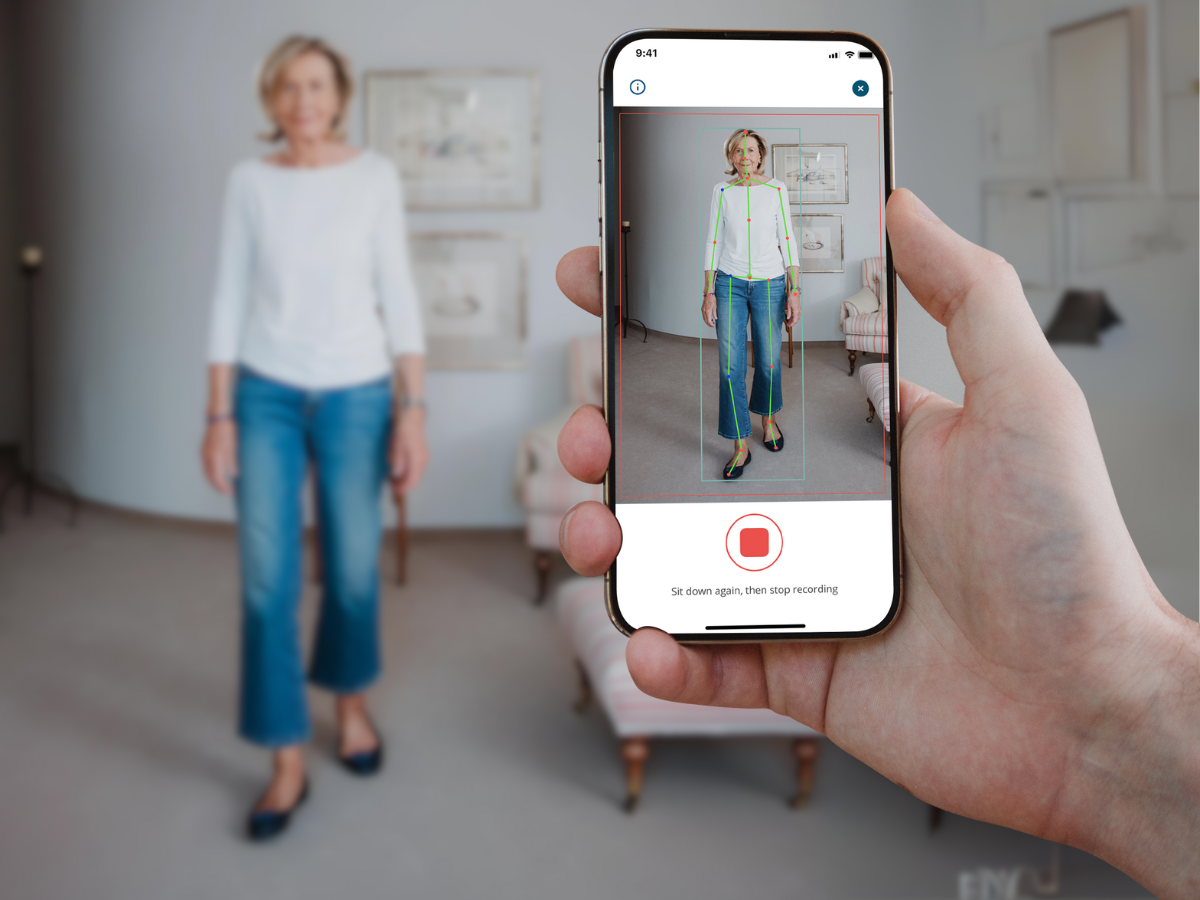
A single therapist, one phone, one patient, no markers, no wearables.

  1. The therapist opens the app, selects the resident or patient, and records a short walk (typically 4 to 6 meters) plus a sit-to-stand and a Timed Up and Go.
  2. The AI gait engine extracts the 6 relevant spatiotemporal and kinematic parameters from the video — cadence, step length and symmetry, stride variability.
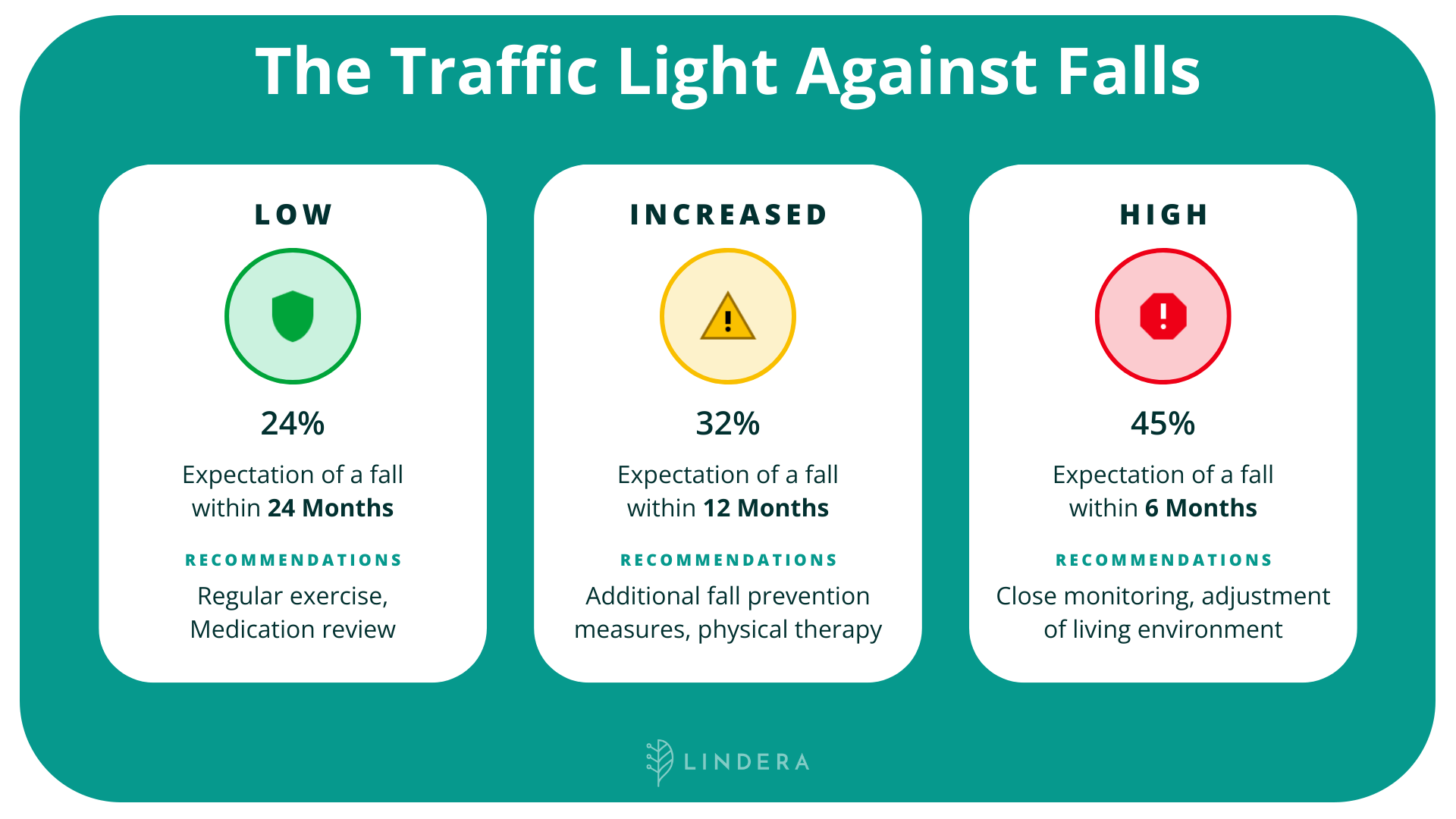
  3. The system maps these parameters to a quantified fall risk score, a clinical interpretation, and a structured record that includes ICD-10 codes (R26.x, R29.6, Z91.81), CPT-eligible findings, and OASIS-aligned mobility items where applicable.
  4. The record is exportable to the EHR, the OASIS, and the billing system as the source of truth.

The therapist keeps clinical judgment. LINDERA provides the objective layer underneath it.


Book a demo

CPT code mapping: what LINDERA supports and how

LINDERA is not a billing tool. It is the evidence engine that makes specific CPT codes defensible.

Home health OASIS alignment LINDERA's mobility output reconciles M1840, M1850, M1860 with the GG-item mobility scores. This single reconciliation is the most common audit finding in BCBS, EXL, and CMS post-payment review of home health claims. Closing this gap is the single largest denial-reduction lever LINDERA produces.

Evaluation and re-evaluation

  • 97161 / 97162 / 97163 — PT evaluation, low / moderate / high complexity. LINDERA documents the number of body systems examined, the stability of the clinical presentation, and the clinical decision-making complexity, which are the three CMS criteria for the complexity tier.
  • 97164 — PT re-evaluation. LINDERA produces a quantified delta against baseline gait parameters, which is what payers ask for when they deny re-evaluations.
  • 97165 / 97166 / 97167 / 97168 — OT evaluation and re-evaluation, with the same complexity logic applied to ADL-related mobility.

Treatment

  • 97110 — therapeutic exercise. LINDERA quantifies the strength, endurance, and ROM impairments the exercise targets.
  • 97112 — neuromuscular reeducation. Stride variability and symmetry data document the proprioceptive and balance impairment.
  • 97116 — gait training. Cadence, step length, and swing-stance asymmetry directly justify the code.
  • 97530 — therapeutic activities. The functional mobility deficit is captured objectively.
  • 97750 / 97755 / 97763 — physical performance test, assistive technology assessment, orthotic/prosthetic checkout. LINDERA provides the standardized, repeatable measurement set that distinguishes these codes from a routine visit.

Remote Therapeutic Monitoring (Part B)

  • 98975 — RTM setup and patient education.
  • 98977 — device supply for monitoring of musculoskeletal system status (16 days of data in 30).
  • 98980 / 98981 — RTM treatment management, first 20 minutes and each additional 20 minutes.
traffic-light-fall-prevention-en

Clinical validation: what the evidence shows

The LINDERA gait analysis algorithm has been validated against gold-standard motion-capture and against established clinical fall-risk instruments. The core peer-reviewed reference is the JMIR Aging study published in 2024, which reports the system's diagnostic performance and feasibility in an older-adult population.

What 100% clinically validated means in practice for a primary care provider:

  • Every gait parameter LINDERA reports has a published validation against an accepted reference standard.
  • The fall risk score has been benchmarked against fall-history outcomes in the target population.
  • The system is CE-marked as a medical device in the EU and is built to a HIPAA-ready standard for US deployment, with the documentation trail US payers and auditors expect.
lindera-sturzpraevention-pflege

What changes for the therapist on the floor

Before LINDERA: a therapist performs a fall risk assessment, records a TUG time, writes a narrative note, and hopes the documentation survives audit.

With LINDERA:

  • The assessment takes 120-180 seconds of video plus a few taps.
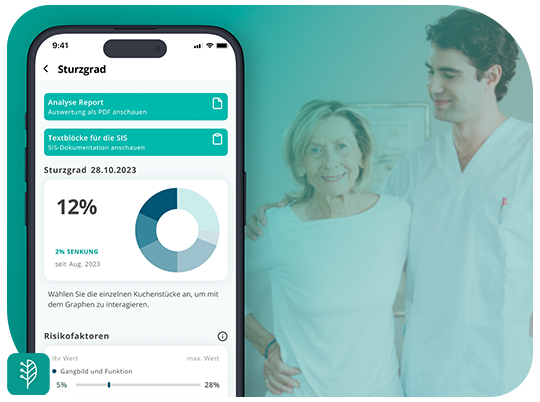
  • The quantitative output prints to the chart with the parameters the auditor will ask for.
  • The re-evaluation in 30 days produces a measurable delta, not a narrative claim.
  • The therapist's clinical note references objective numbers, not subjective impressions.

Throughput goes up because the clinician spends less time documenting and more time treating. Denial rate goes down because the documentation now matches the bill.

Explore more
01-lindera-sturzpraevention-besprechung

Where LINDERA fits across the primary care continuum

Skilled Nursing Facility (SNF) — Universal admission screening within 48 hours, weekly therapy progress documentation, MDS Section GG support, Part A case-mix defense.

Home Health — OASIS Start of Care and Recertification, M1840 / M1850 / M1860 / GG-item reconciliation, episode-level outcome documentation for value-based purchasing.

Assisted Living — Move-in baseline, periodic reassessment, family-facing trend reports, escalation trigger to higher level of care before a fall event forces it.

Memory Care — Adapted protocol for residents who cannot follow multi-step verbal instructions; gait pattern stability tracking that detects decline earlier than ADL-based observation alone.

Outpatient and primary care — Annual Wellness Visit fall risk requirement (HCC G8907 / Z91.81), cognitive-motor dual-task screening, RTM enrollment for patients with documented mobility impairment.

  • Audit readiness. Time-stamped, video-anchored, payer-mapped — the kind of trail that ends an audit fast.

Most therapy partners see net-positive economics inside the first quarter.

mobilitaetsanalyse-app

How LINDERA differs from the alternatives a primary care provider has already evaluated

  • Wearable sensors require distribution, charging, compliance, and re-issue. Force-plate and mat systems are capital equipment in one room. Manual standardized tests do not produce defensible objective data. EHR-native templates document the visit but generate no new measurement.

  • LINDERA is a smartphone app that any therapist can run on the patient in the patient's own room, with output that flows into the EHR and the bill. There is no hardware to procure, no IT integration project as a precondition, and no clinician retraining beyond a single onboarding session.

Total Provider Time for Fall Prevention

3
Minutes
100%
CMS Requirement
MIPS
Quality Measures

FAQ - Frequently asked questions

Is LINDERA a substitute for clinical judgment?

LINDERA produces objective measurements. The therapist interprets, plans, and bills.

Does LINDERA replace standardized tests like TUG, Tinetti, or Berg?

LINDERA captures and quantifies the same gait events these tests assess and adds parameters they cannot capture. Many providers continue to record the test name in the chart while using LINDERA's parameters as the supporting data. The LINDERA App was also compared to TUG, Tinetti and Berg by independent researcher: https://aging.jmir.org/2022/3/e36872

Is LINDERA HIPAA-ready?

Yes. US deployment uses US-region hosting, Business Associate Agreements, and the audit trail discipline US payers and surveyors expect. LINDERA is ISO 27001 certified.

How is LINDERA RTM-eligible?

LINDERA generates device-collected, time-stamped, clinically reviewed data on musculoskeletal system status. This satisfies the data and time-tracking elements CMS requires for 98977, 98980, and 98981. The therapist's clinical review is logged in-app.

How long does a pilot take?

A typical pilot runs 45 days: 5 days of onboarding and baseline, 30 days of operational use with weekly denial-rate and throughput tracking. The pilot deliverable is a quantified ROI report against the provider's own billing data. 10 days of review and feedback.

Can administrators see facility-level trends?

Yes. The administrator dashboard reports fall risk distribution, intervention frequency, denial-rate movement, and therapy productivity by clinician and by setting.

What technical requirements do I need?

You need:

  • A smartphone or tablet with iOS or Android
  • A stable internet connection
  • Sufficient storage space for the app The exact system requirements can be found on this website in the Compatibility section.

Your question hasn't been answered yet?

Newsletter Subscription

Stay informed on our pathway to FDA approval.