
Skip to content

More evals per week — without more hours in the chart.

LINDERA captures the outpatient eval once — full-body video plus the clinician's spoken observations — and returns a suggested evaluation, reassessment, or discharge note at parity with your own templates, in under five minutes. Your PTs and OTs review, edit, and attest. The documentation time goes back into patient capacity.

CE
Class IIa medical device
HIPPA
compliant I ISO 27001
GAITRite
Validated against
JMIR Aging
Peer-reviewed

LINDERA is a clinically validated, smartphone-based mobility analysis that gives outpatient therapy teams a measured, QA- and billing-ready eval draft in under five minutes

 — objective, suggested-only, and audit-grade.

Lindera_2017_104

The bottleneck in outpatient therapy isn't care. It's the charting.

Only your PTs and OTs can perform and bill an evaluation — which makes their time the capacity ceiling of the clinic. Today that time leaks into documentation: a ten-to-fifteen-minute manual gait observation, a narrative note written from memory after the visit, standardized tests recorded as a single number with nothing objective underneath them.

The result is fewer evaluations per clinician per week, inconsistent documentation between assessments, and objective findings that live in the therapist's head instead of the chart. LINDERA closes that gap — one capture, one measured record, one suggested note the clinician verifies.
RWD Paper - TOC Thumbnail

One capture. Three steps. Under five minutes.

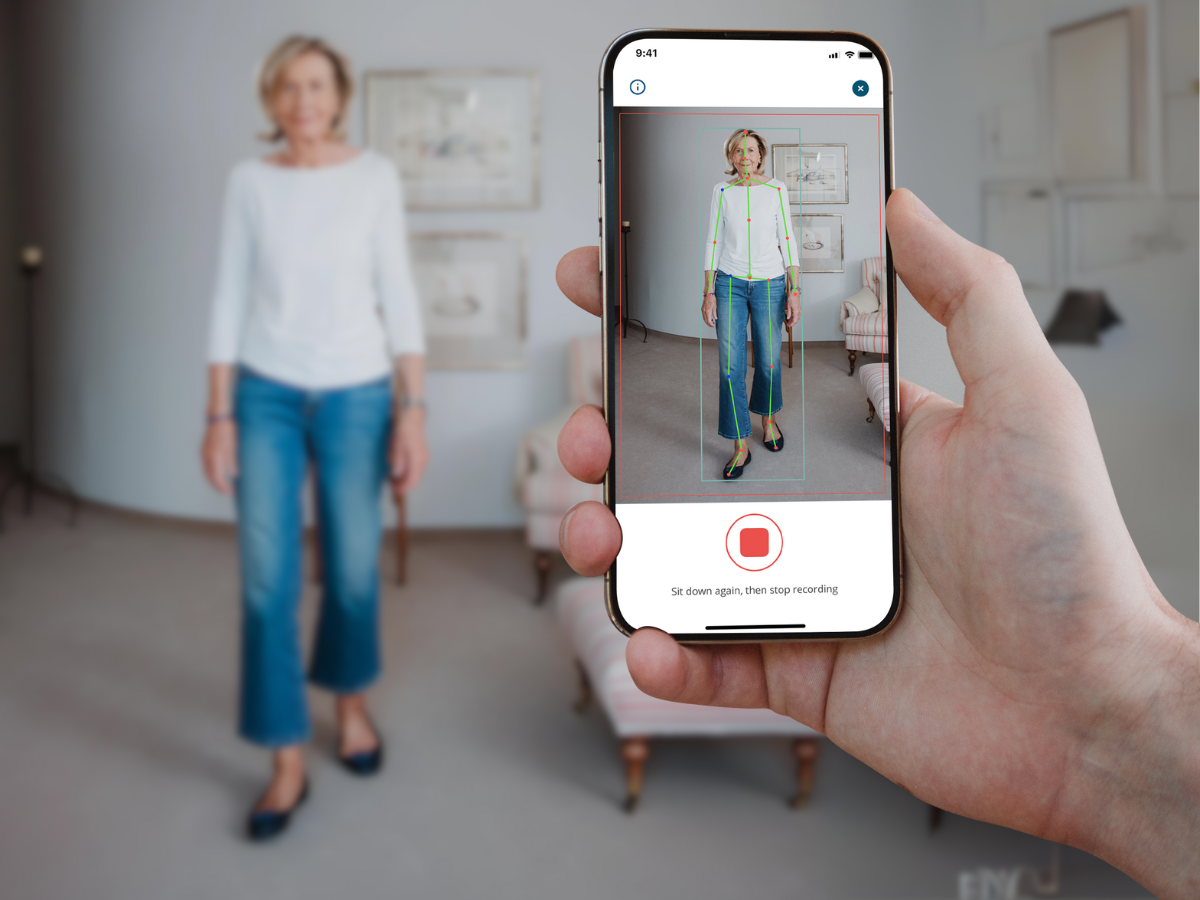
  1. The therapist opens the app, selects the patient, and records a short guided sequence on a standard phone or tablet — a walk plus a sit-to-stand and a Timed Up and Go — while speaking their observations aloud. No markers, no wearables, no mats.
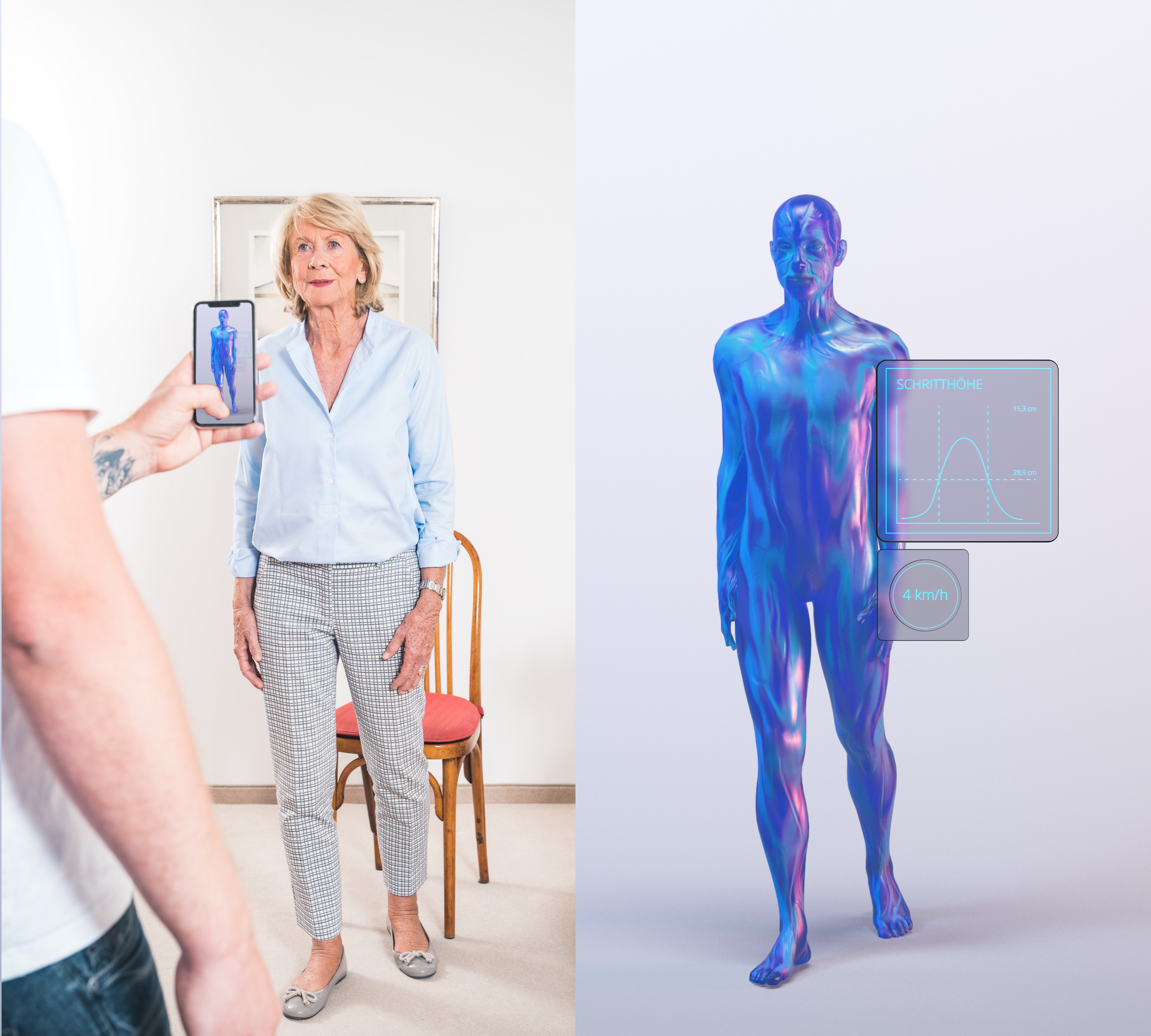
  2. LINDERA's AI extracts the objective movement parameters from the video — gait speed, cadence, step length and symmetry, stride variability — and transcribes the spoken observations.
  3. The system assembles a suggested evaluation, reassessment, or discharge note at parity with your templates, with the objective numbers already in place. The clinician reviews, edits, and attests. Suggested only — the clinician verifies; the EHR submits.

The therapist keeps clinical judgment. LINDERA provides the objective layer underneath it and writes the first draft.
Book a demo
210303_Stills_Website_side_by_side_v06

Not just an ambient scribe — a measured one.

Every other AI documentation tool transcribes what was said. LINDERA grounds the note in what was measured. The named, evidence-based tests reviewers expect — Timed Up and Go, sit-to-stand, the Short Physical Performance Battery, and full gait analysis — are captured in the same session and written into the eval as objective evidence, not narrative impression.

That is the difference between a note that sounds complete and a note that is defensible: the objective measurement is in the chart, tied to the documentation field a reviewer reads.
 

Lindera_2017_193

The same measurement your patients can actually see.

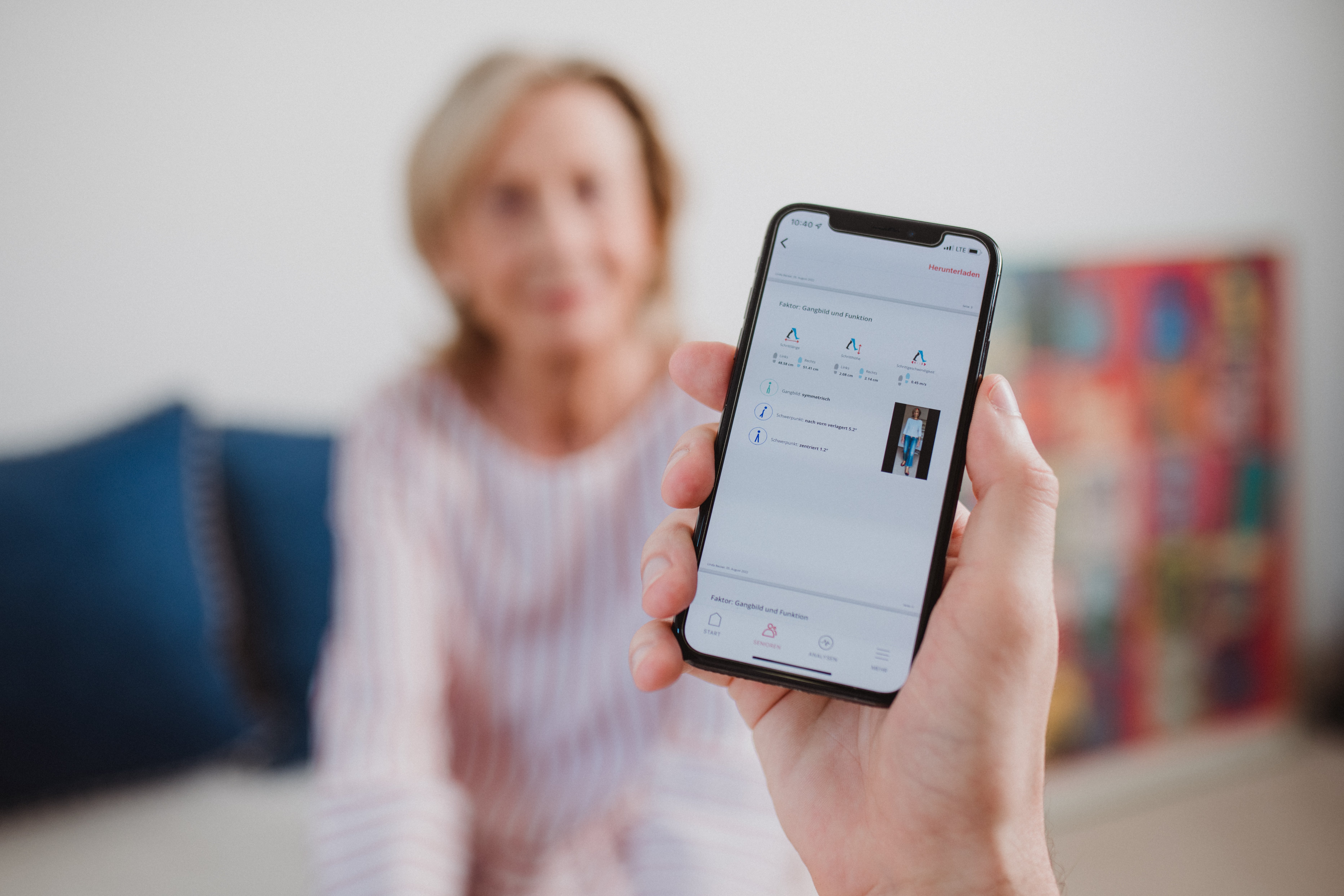
The objective data that drafts the note also becomes a clear, visual report the patient understands. The senior — and their family — sees their own gait speed, balance, and strength against age-matched norms, and watches those numbers move across the plan of care.

Progress a patient can see is progress a patient believes. Objective, visual feedback drives buy-in, motivation, and adherence in a way "you're doing better" never will — and gives the patient something concrete to take home and talk about. For an outpatient clinic, that means stronger engagement through the episode, fewer no-shows, and better-finished plans of care. No ambient scribe produces this.

_JM08397_lindera_c_julia_mueller_091-1

Where the hours and the capacity actually move.

  • Therapist throughput. A two-minute objective capture and an auto-drafted note replace a ten-to-fifteen-minute manual observation plus after-visit charting. More evaluations per PT/OT per week — the clinic's real capacity lever.
  • Documentation minutes saved per eval. Measured and reported, not asserted.
  • QA velocity. Completeness checks move each chart from red to green and show exactly what's missing — before it reaches billing.
  • Consistency between assessments. One objective source means the reassessment shows a measured change against baseline, not a re-typed narrative.
  • Patient engagement. Objective progress reports that keep seniors in the plan of care.

Most outpatient partners see net-positive economics inside the first quarter.
traffic-light-fall-prevention-en

The evidence engine under the codes your therapists already bill.

LINDERA is not a billing tool. It is the objective measurement layer that makes outpatient therapy documentation defensible. Its output maps by descriptor to the work your clinicians do:

  • PT and OT evaluation — low, moderate, and high complexity. LINDERA documents the number of body systems examined, the stability of the presentation, and the decision-making complexity — the criteria that distinguish the complexity tiers.
  • PT and OT re-evaluation. A quantified change against baseline gait parameters — the measurable delta reviewers ask for.
  • Therapeutic exercise, neuromuscular reeducation, gait training, therapeutic activities. The strength, balance, proprioceptive, and functional-mobility impairments these interventions target, captured objectively.
  • Physical performance test and assistive-technology assessment. The standardized, repeatable measurement set that distinguishes these from a routine visit.
csm_NatureScientificReports_75_bb4c5038ca

100% clinically validated — tested, not "AI-assisted."

  • Validated against GAITRite, the gold standard for gait analysis (Nature Scientific Reports; ICC 0.982).
  • Peer-reviewed in JMIR Aging (2024, open access), with independent comparison to TUG, Tinetti, and Berg.
  • Every gait parameter LINDERA reports has a published validation against an accepted reference standard.
  • CE-marked Class IIa medical device in the EU; HIPAA-ready architecture and ISO 27001 for US deployment.
_JM08050_lindera_c_julia_mueller_029

The objective data — without the hardware, the integration project, or the retraining.

Wearable sensors need distribution, charging, and compliance. Force-plate and mat systems are capital equipment locked to one room. Manual standardized tests produce a single score with no objective data underneath. Generic ambient scribes transcribe the conversation but measure nothing and create no patient-facing evidence.

LINDERA is a smartphone app any therapist runs on the patient in the patient's own room — objective measurement, an auto-drafted note, and a patient-facing report, all flowing into the EHR. No hardware to procure, no IT integration as a precondition, no retraining beyond a single onboarding session.

<5 min
Capture to QA- & billing-ready draft
~85%
Faster than traditional assessment (5min vs. 20–45 min)
ICC 0.982
Agreement vs. gold standard (Nature Scientific Reports)
How does LINDERA reduce documentation time for outpatient therapy?

It captures the eval once — video plus spoken observations — and returns a suggested eval, reassessment, or discharge note at template parity, with objective measurements already in place. The clinician reviews and attests instead of writing from scratch.

Is LINDERA an AI scribe?

It does what a scribe does and more. A scribe transcribes speech; LINDERA also measures movement — gait, Timed Up and Go, sit-to-stand, SPPB — and grounds the note in that objective data. The clinician always verifies and submits.

Is LINDERA FDA cleared?

LINDERA is a CE-marked Class IIa medical device in the EU and is HIPAA-ready for US deployment. The US 510(k) clearance pathway is in progress. Patient-specific clinical inference features remain off until clearance.

Does LINDERA replace standardized tests like TUG, Tinetti, or Berg?

No — it captures and quantifies the same gait events those tests assess and adds parameters they can't. Many providers keep recording the test name while using LINDERA's parameters as the supporting objective data. Independent comparison is published in JMIR Aging (2024).

Does the patient see their results?

Yes. LINDERA produces a clear, visual report showing the patient's measured gait, balance, and strength against age-matched norms, and tracks it across the plan of care — a feedback tool that supports engagement and adherence.

Is LINDERA HIPAA-ready?

Yes — US-region hosting, Business Associate Agreements, and the audit-trail discipline US payers and surveyors expect. ISO 27001 certified.

Can LINDERA support remote therapeutic monitoring?

LINDERA captures device-collected, time-stamped, clinically reviewed measures of musculoskeletal function between visits. RTM billing features switch on after FDA clearance; today the value is the measured-function data stream.

How long does a pilot take?

A typical pilot runs about 45 days: onboarding and baseline, 30 days of operational use with weekly throughput and documentation-time tracking, then a review against the provider's own data. The deliverable is a quantified ROI report.

Can administrators see clinic-level trends?

Yes. The administrator dashboard reports throughput by clinician and setting, documentation-time saved, QA red-to-green velocity, and assessment volume.

What do I need to run it?

An iOS or Android phone or tablet, a stable internet connection, and storage for the app. 

Your question hasn't been answered yet?

Newsletter Subscription

Stay informed on our pathway to FDA approval.